In-camera performance
Angelika Puff & Paweł Sobczak
07’00”
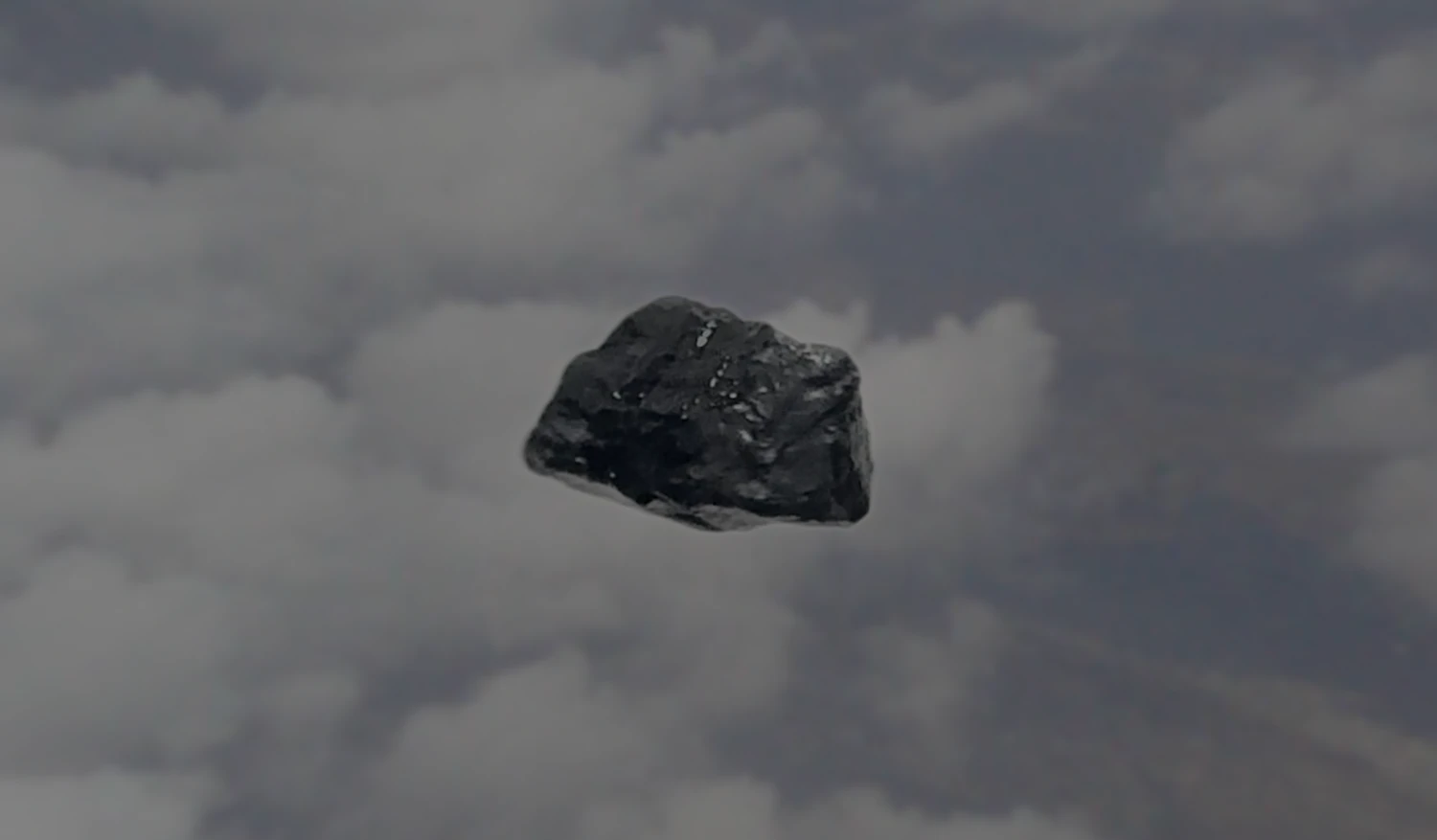
“As a child I was told that if I did not behave, I would get potato peelings and coal. The peelings sometimes turned into a rod, while the coal stayed the same.
Coal was divided into different grain sizes. ‘Dust’ was the finest fraction, with a powderlike structure. ‘Pea’ consisted of small pieces. ‘Nut’ appeared in cases of more serious misbehaviour. There was also ‘block’, made of large lumps that burned more slowly.
After receiving information about my mother’s health condition, I visited Tata Steel. A complex that includes a steelworks, a coking plant, and an extensive infrastructure for transporting iron ore and coal. The plant is located directly on the coast of the North Sea. For years, this area has been described in environmental reports and analyses concerning dust emissions and their potential impact on the health of residents. Some studies indicate elevated concentrations of substances classified as carcinogenic.
Returning to the coal from childhood, I once found its lumps under the Christmas tree. The day before, there had been an argument with my sister. I assumed it was a punishment for disobedience. Only after Christmas dinner did it turn out to be an innocent joke from her side, and that the real present had been given at the moment the first star appeared.
It was a light-up globe. It was quickly taken apart because I wanted to see its inside. The light bulb cable became loose and the globe for a long time remained an empty, open form collecting dust on my desk.
My mother’s body is not a structure that can be opened in this way. It is not empty either. Inside her chest there is a fragment whose density is visually comparable to the ‘pea’ fraction. It is currently under observation, awaiting information regarding its nature and possible change into nut or block.”

video-art
05'59"
16:9
(from Greek chrysopoiía) means “the making of gold”, an alchemical term referring to the process of transforming matter into a valuable metal.
The film presents an individual whose contact with objects and living organisms results in their transformation into carbon. The narrative also includes experimental reconstructions of sacrificial rituals inspired by biblical mythology, including a scene depicting the transformation of an offering composed of fruit and a dead fish. The work makes use of locations in Silesia alongside elements from other sites, including salt panels from Gozo, juxtaposing different models of raw materials and their processes of transformation.